
What We Tend Becomes What We Give
On care, consequence, and the distance between a living animal and food.
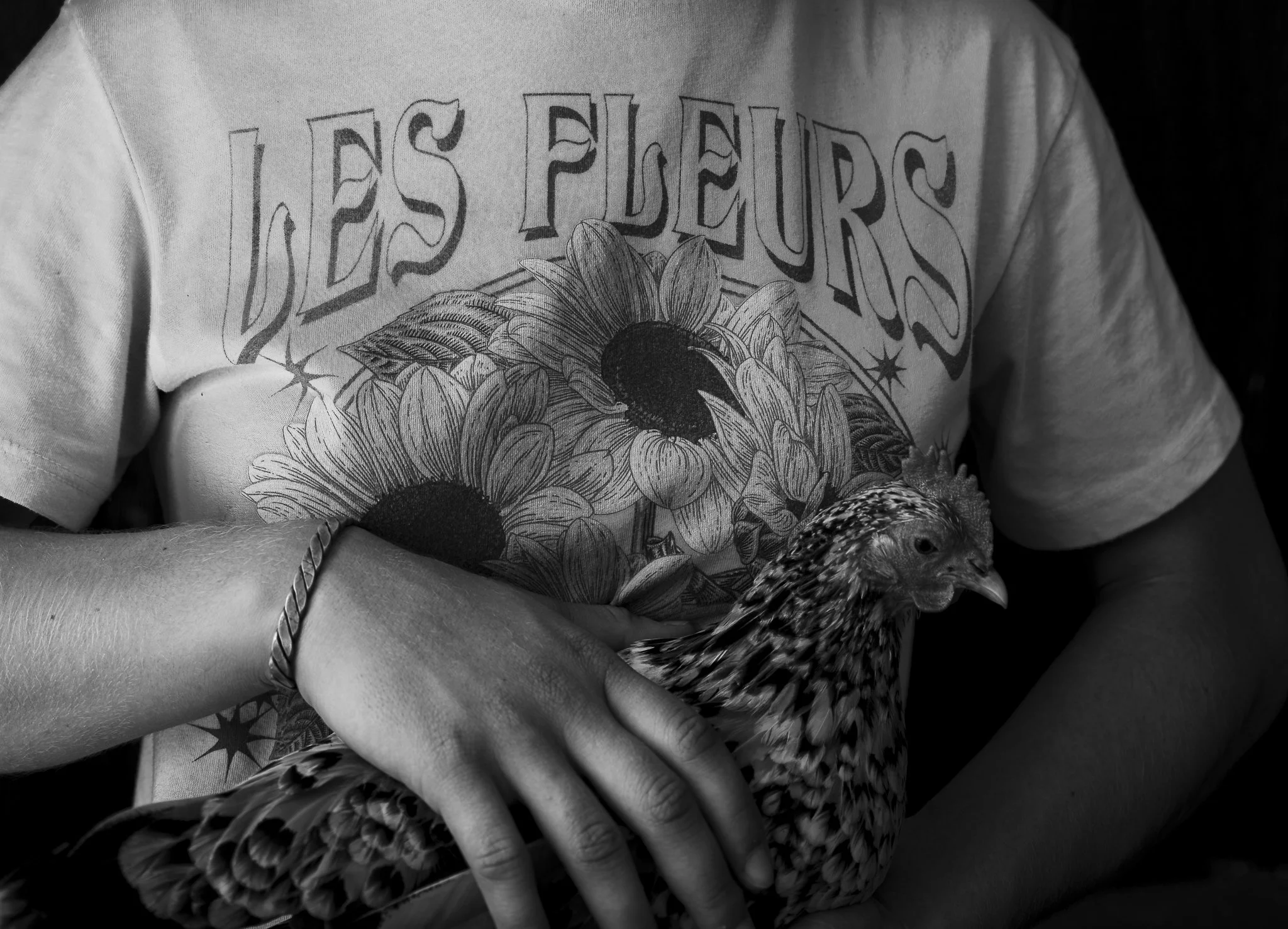
On August 17, I posted a triptych to my one-photograph-a-day project: a chicken held in an embrace, the abstracted feathers of a wing, and a row of prepared birds beneath the light of an open refrigerator.
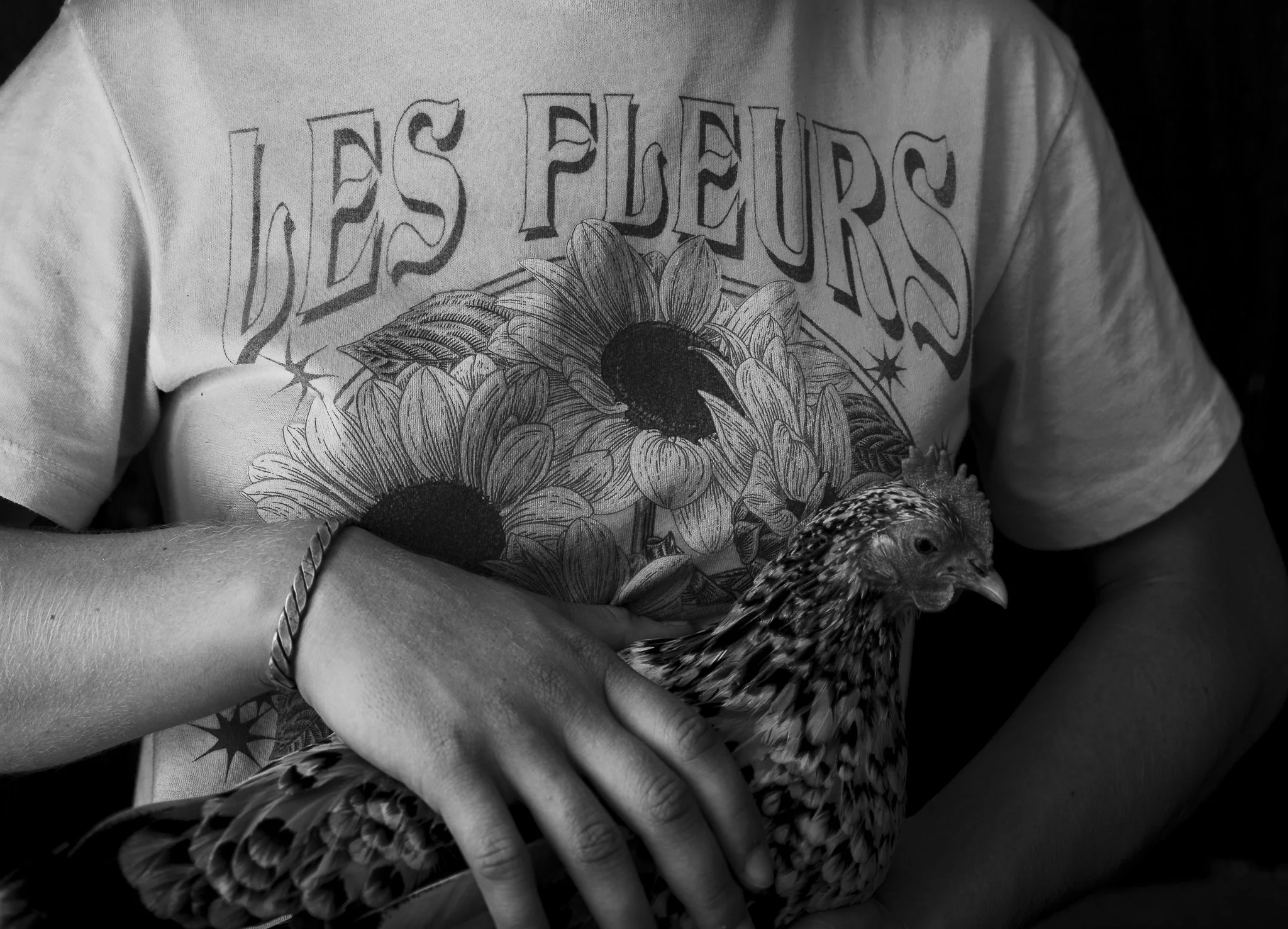
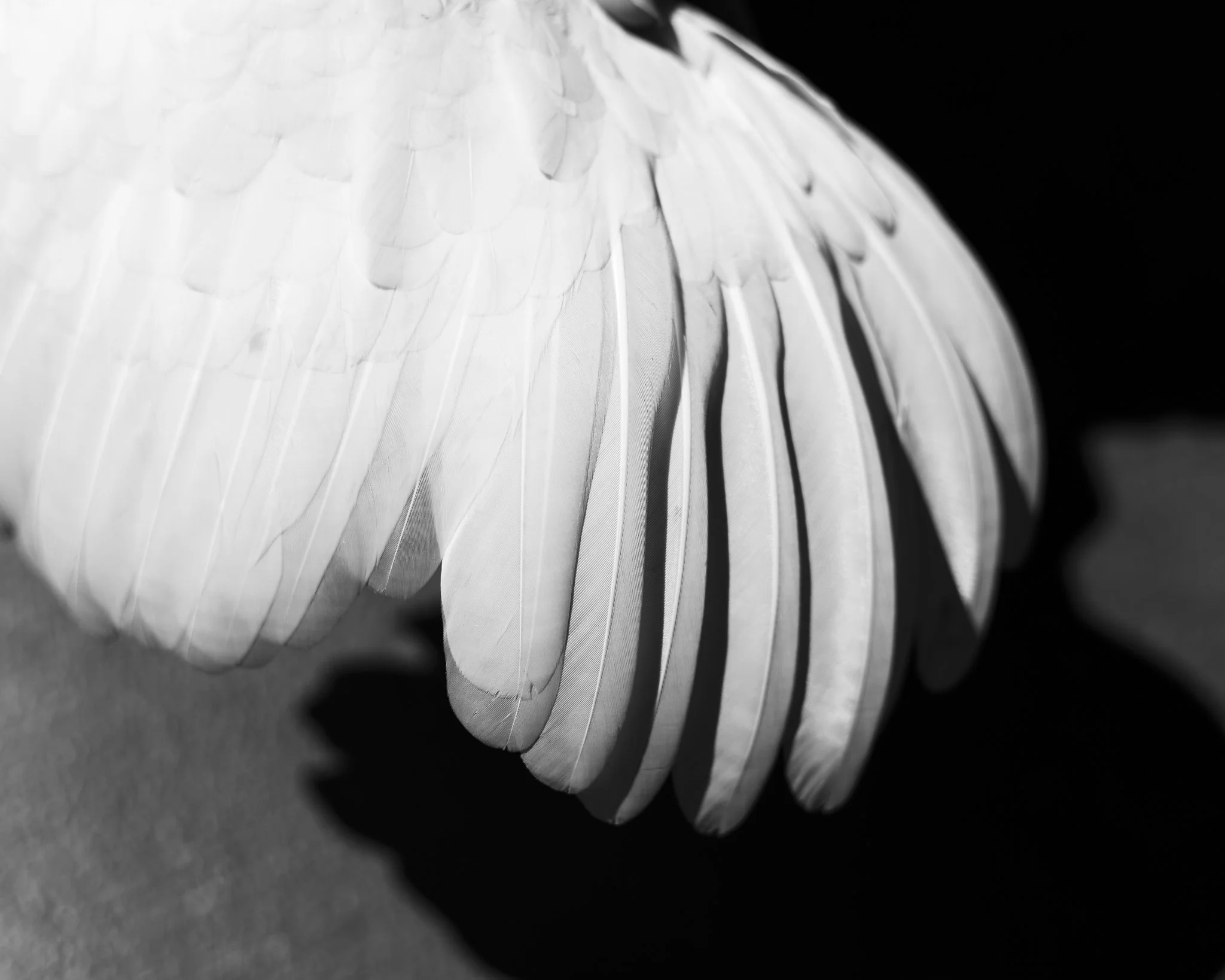
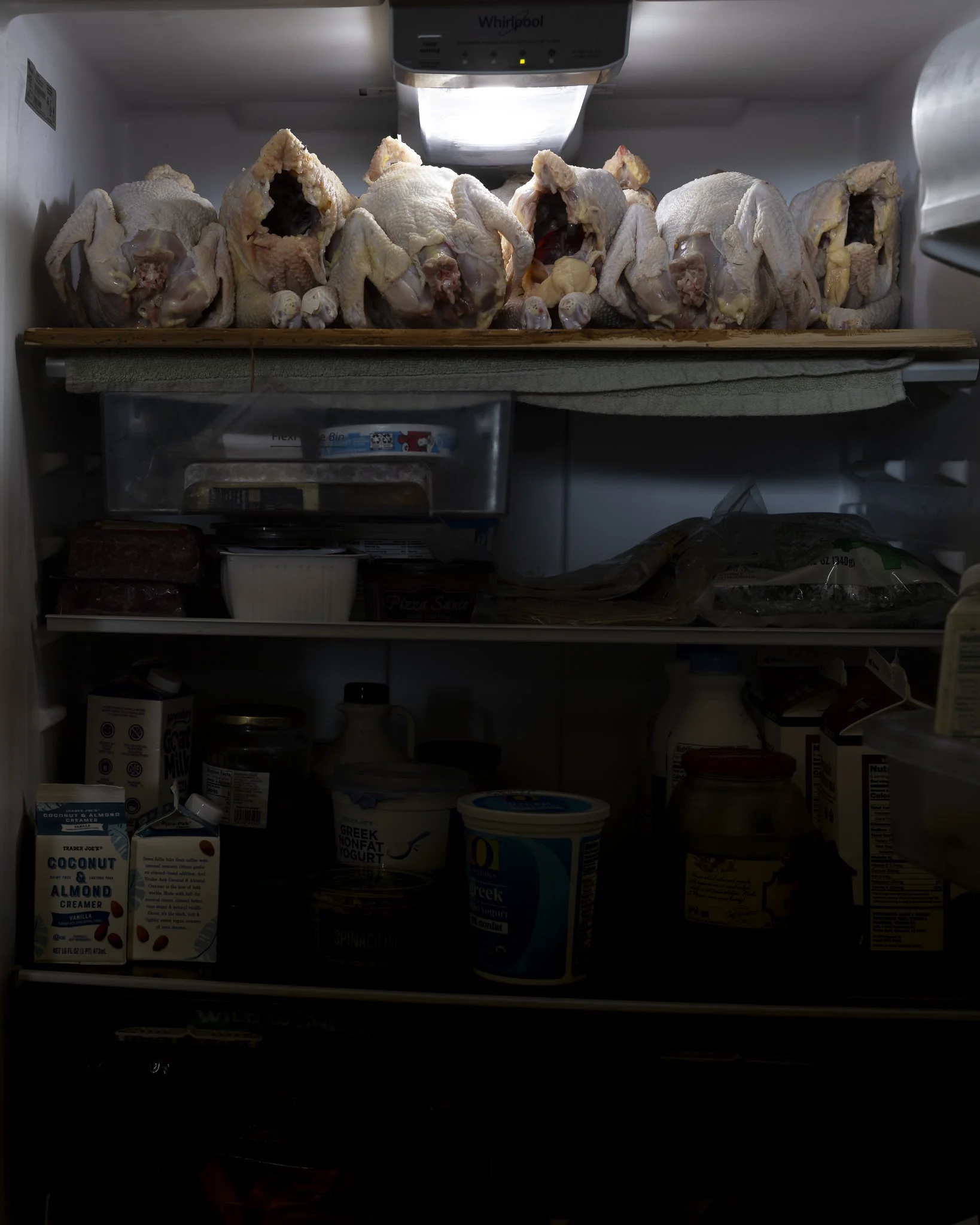
Together, the three photographs expressed something I had never been able to articulate through an image: the fragile relationship I have with my food.
Raising animals connects me to life in a way little else can. It creates a daily relationship built through feeding, tending, observing, and protecting. These animals bring warmth and personality into our lives. Eventually, they also provide sustenance.
Holding both truths at once is difficult.
Taking a life is visceral. Every sense becomes heightened. Great care is given to what must happen, followed by one decisive moment in which a living animal becomes a carcass. There is grief in that transition, but also relief when it is done properly. There is no turning back. The body’s final reflexes arrive on their own, then the last breath gives way to stillness.
Then the work begins.
A carefully placed cut here, a bend there, and the animal slowly becomes a product. With each step, it grows less recognizable. Feathers are removed. The body is cleaned and prepared. Eventually, it is packaged and placed in the refrigerator, ready to be unwrapped, cooked, and served.
The distance between animal and food is remarkably short. Most consumers experience only the final step.
The triptych holds that entire transformation without showing the act itself. The first photograph is about relationship: hands resting gently on a living bird. The last is about provision: prepared chickens arranged among the ordinary contents of a refrigerator. Between them is the wing, still recognizable, but beginning to give way to line, rhythm, light, and form.
The wing is the threshold.
The space between the photographs contains everything that cannot be seen: care, responsibility, death, labor, and transformation.
Photography adds another layer of processing to an already intentional way of living. A camera never simply records what is there. Framing removes context. Exposure changes light. Focus determines what is allowed to remain certain. Sequencing creates relationships that did not exist within any single frame.
Like preparing an animal for food, photography transforms through a series of deliberate choices. With each decision, the subject becomes something else.
That idea closely relates to my professional work in ophthalmic product design and marketing. Much of my work involves turning complexity into something another person can understand and use. We organize information, establish hierarchy, remove distractions, and guide attention. We translate complicated technology into a product, an experience, or a story.
Reduction is necessary, but it is never neutral.
As something becomes clearer, simpler, and more usable, it can also become separated from its origins. A product can conceal the years of thought, uncertainty, iteration, and human effort behind it. Food can arrive in a package without evidence that it was once alive. An image can appear effortless while concealing the decisions that made it possible.
“The responsibility is not to avoid transformation. Transformation is the work. The responsibility is to remain conscious of what is being removed and to preserve what matters.”
This is one reason my daily photographic practice has become so important to me. It keeps me attentive. It asks me to look beyond the immediate subject and recognize the systems, relationships, and consequences surrounding it. It reminds me that the choices we make determine not only what we create, but what we are capable of understanding.
I began this 365 project to keep myself making photographs. I am discovering that the daily act does more than create momentum. It gives me a way to process my life—to explore tensions I cannot resolve and make visible relationships I cannot easily explain.
Care and consequence.
Life and provision.
Recognition and abstraction.
The choices we make lead to the lessons we learn. To keep looking, questioning, exploring, and discovering is to remain fully engaged with life.
What we tend eventually becomes what we give.
