
Designing for a Face in Motion
Client: Topcon Healthcare
Project: Ophthalmic Positioning Apparatus for the Chronos Binocular Refraction System
The human face is remarkably difficult to design around. Its proportions vary widely, its surfaces are curved and asymmetrical, and it rarely remains still. Even a simple act such as speaking changes the position of the jaw, cheeks, and head.
This presented a unique challenge while developing a positioning apparatus to support Topcon Healthcare’s Chronos binocular subjective and objective refraction system: how could we hold a patient’s eyes in a consistent position without preventing the patient from standing comfortably, moving naturally, or responding to the examiner?
The problem appeared mechanical, but it was fundamentally human.
Questioning the Conventional Chin Rest
Traditional ophthalmic instruments commonly stabilize the head with a forehead support and chin rest. This familiar arrangement works well when the patient remains still. During a subjective refraction, however, the examiner needs the patient to speak, comparing lenses and responding to questions such as, “Which is clearer, one or two?”
Each response requires jaw movement. When the chin serves as a primary point of support, that movement can shift the head and alter the position of the eyes relative to the instrument.
I began by reconsidering a basic assumption: did the chin need to support the face at all?
Looking closely at facial anatomy suggested another possibility. The forehead and cheekbones could provide stable points of contact while leaving the lower face free. This shifted the problem from restraining movement to determining which movement mattered and which could be allowed.
Did the chin need to support the face?
Question the inherited form, identify the essential function, and look for an opportunity to make the experience more human.
Designing for Human Variation
No two faces share precisely the same width, height, contour, or symmetry. A useful solution could not depend on a single fixed geometry, nor could it require complicated adjustments for every patient.
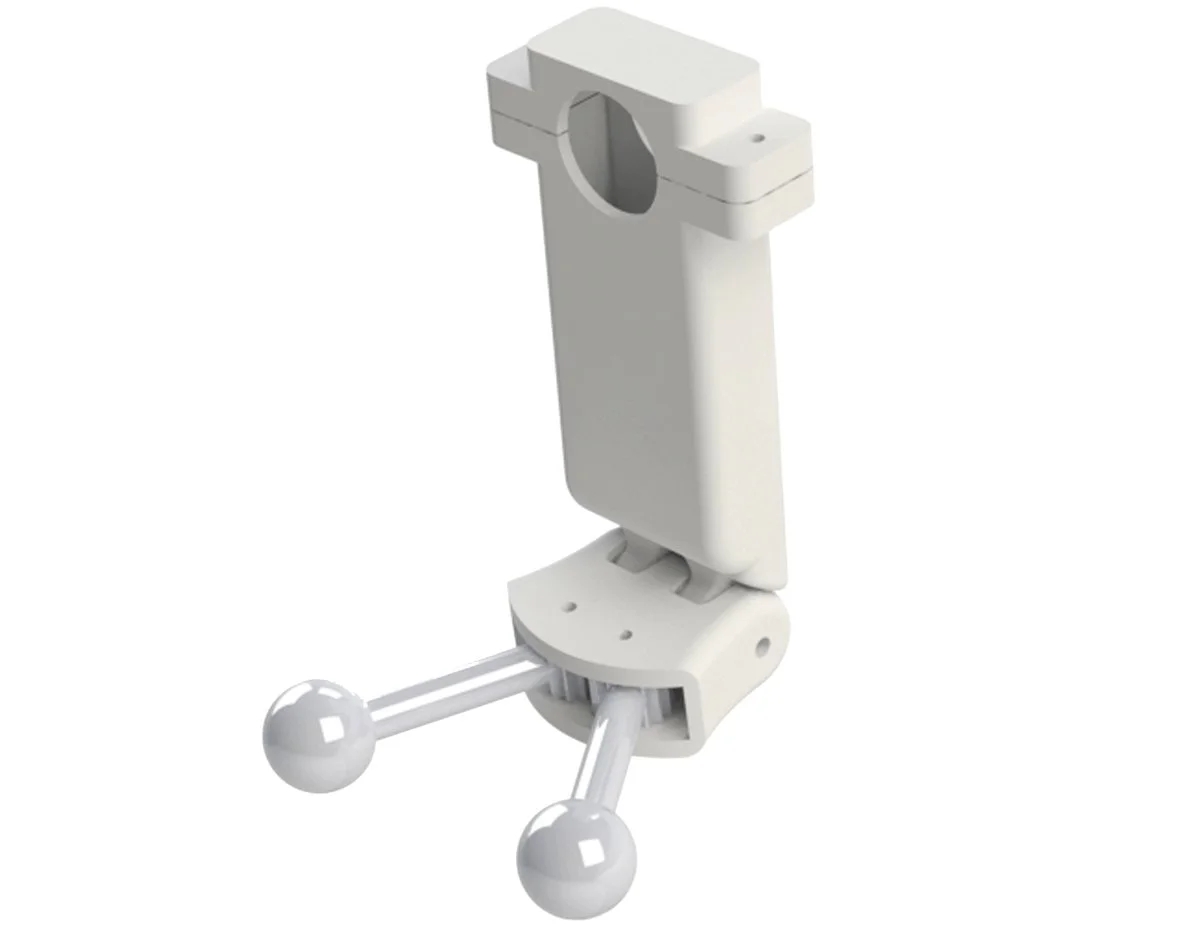
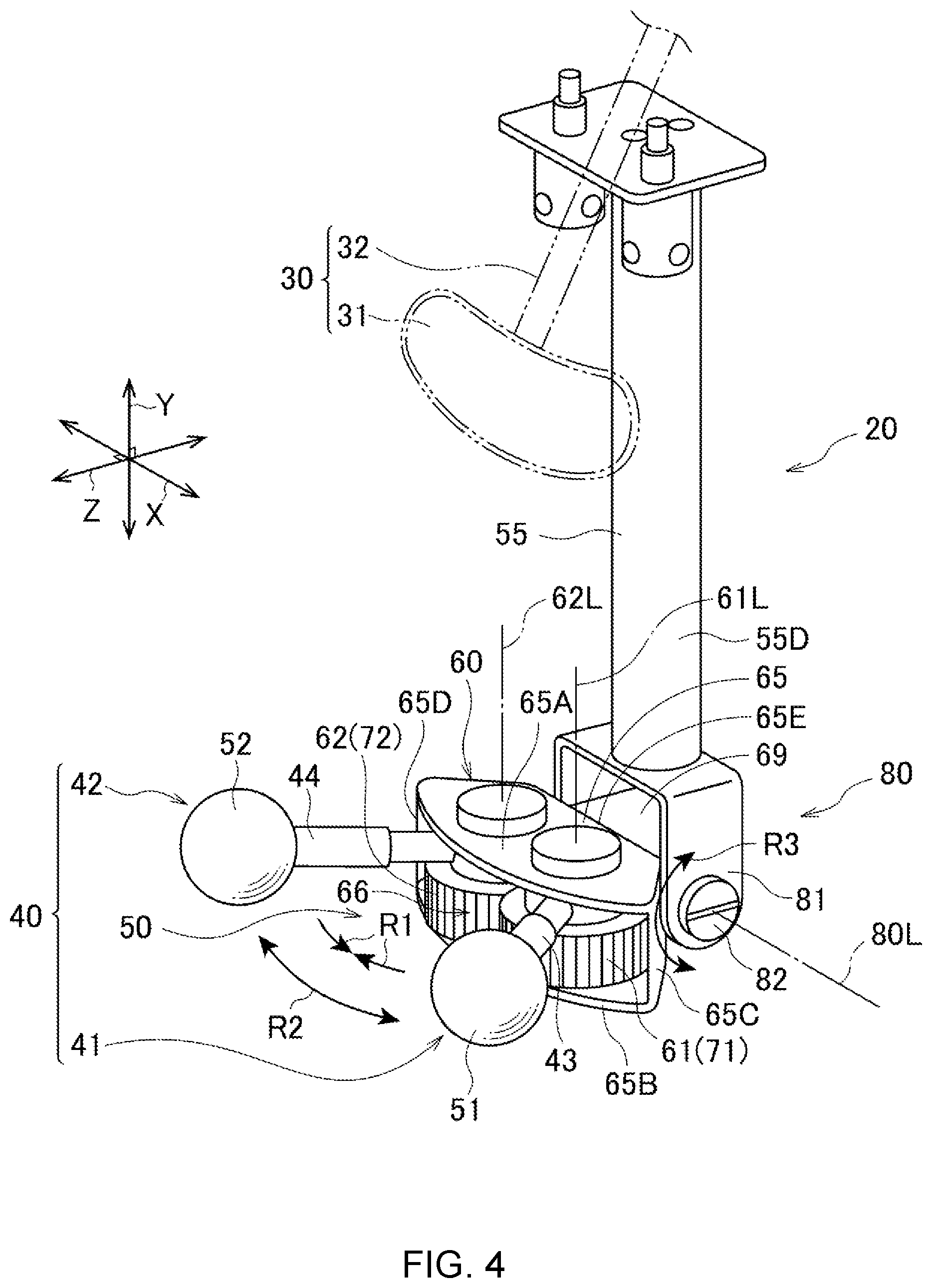
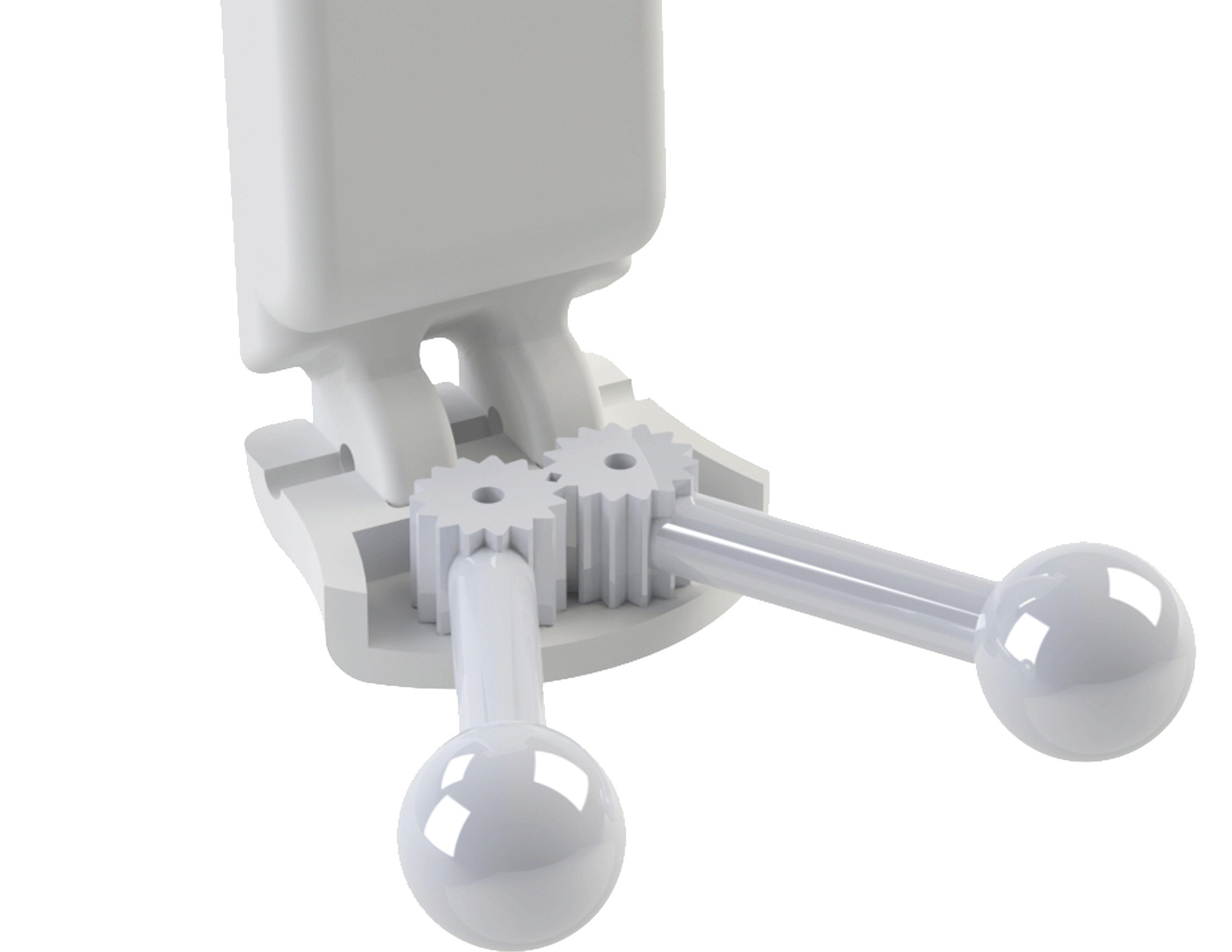
The resulting apparatus uses a forehead contact surface and two independently positioned cheek supports. These supports rest against the left and right cheekbone regions, while a coupled mechanism allows them to open and close relative to one another. As the system adjusts, it accommodates a range of facial widths and contours while helping maintain the position of the eyes.
The mechanism translates a simple adjustment into coordinated movement. Beneath the exterior housing, intermeshing gears synchronize the cheek supports, allowing them to move together while preserving balance around the patient’s face.
The design provides stability where it is needed, at the forehead and cheekbones, while preserving freedom where it matters, at the mouth and jaw. The patient can stand, speak, and participate naturally in the examination without sacrificing consistent ocular positioning.
My Approach to Product Innovation
I am drawn to problems that exist between disciplines. This project required an understanding of anatomy, clinical workflow, mechanical relationships, ergonomics, and patient behavior. None of these considerations could be treated independently.
My process began with observation. Rather than asking how to improve a conventional chin rest, I asked what the examination actually required. The clinician needed reliable eye positioning. The patient needed comfort, adaptability, and the ability to communicate. Once those needs were separated from the conventions of existing equipment, a different solution became possible.
This is central to my approach to innovation: question the inherited form, identify the essential function, and look for an opportunity to make the experience more human.
The most successful medical devices often make their complexity disappear. A patient should not need to understand the mechanism supporting them, and a clinician should not have to interrupt the examination to manage it. The product should adapt quietly, intuitively, and predictably.
A Small Mechanism With a Human Purpose
The ophthalmic positioning apparatus is a relatively focused component within a much larger diagnostic system, yet it reflects a broader belief about medical technology. Precision and empathy are not competing design goals. A device can support accurate clinical measurement while also respecting the natural behavior of the person being examined.
Innovation sometimes begins with advanced technology. At other times, it begins by noticing something ordinary: a patient answering a question, a jaw beginning to move, and a head shifting almost imperceptibly.
That small observation became an invitation to reconsider the entire point of contact between the patient and the instrument. The resulting invention supports the face without silencing it, allowing precision and conversation to coexist.
