
Designing a Better Point of Contact
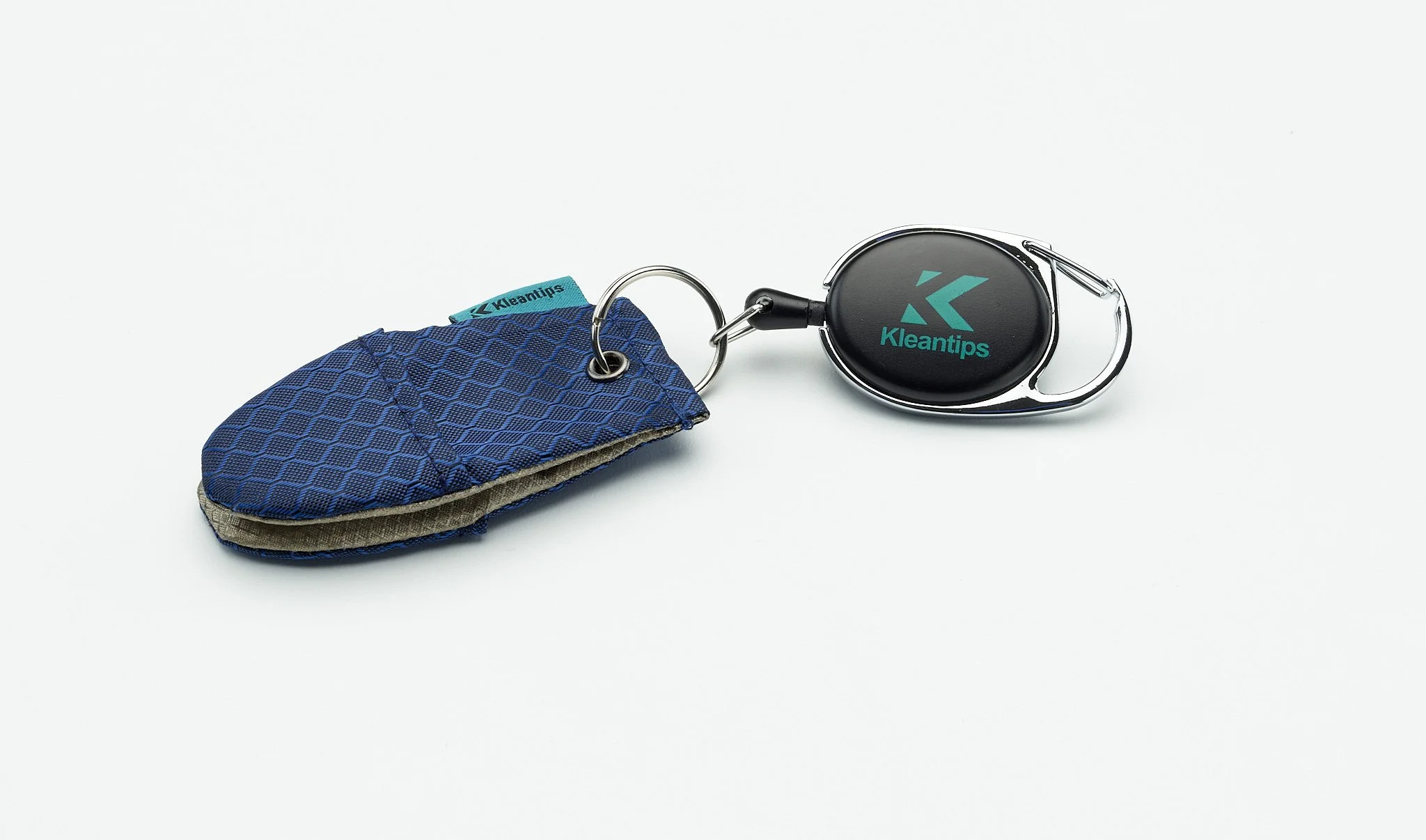
Project: Kleantips
Focus: Antimicrobial materials, conductive textiles, and everyday carry design
The design for Kleantips began during a period when ordinary interactions suddenly demanded closer attention. Opening a door, entering a code at an ATM, or using a public touchscreen no longer felt entirely incidental. Each action raised the same practical question: could there be a simple way to create separation between the hand and frequently touched surfaces without making daily life more complicated?
Kleantips was my response to that question.
Rather than creating a rigid tool for a single task, I wanted to design a compact, flexible interface that could move naturally across many environments. It needed to work with the hand, operate common controls, remain accessible throughout the day, and disappear easily into a pocket when it was no longer needed.
A Small Problem Repeated Throughout the Day
Frequently touched surfaces are part of modern life. Door handles, keypads, elevator buttons, payment terminals, and public touchscreens are designed for continuous shared use. Avoiding them entirely is neither practical nor desirable.
When Kleantips was conceived, many available solutions addressed only part of the problem. A rigid hook could pull a door but could not comfortably operate every type of handle or control. A conventional cloth could cover the fingers, but it might not work with capacitive touchscreens. Disposable barriers created additional waste and required a constant supply.
The challenge was to create something versatile enough for everyday life, while remaining small enough to be an everyday carry.
This required thinking beyond the object itself. How would it be retrieved? How would the hand find the correct position? How would it remain available without being held? How could it provide useful separation while preserving touch, grip, and control?
Material as Technology
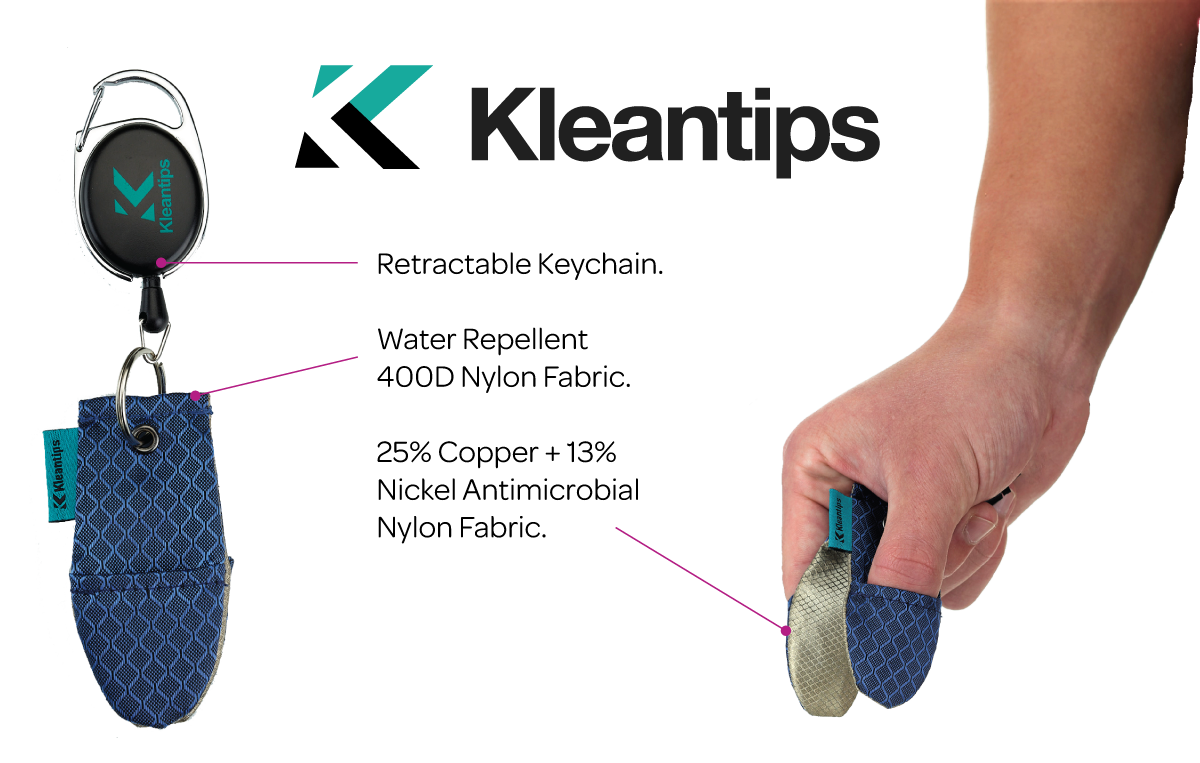
The central innovation in Kleantips is its material construction. The contact surface incorporates a conductive textile containing 25 percent copper and 13 percent nickel. These metals give the fabric antimicrobial properties while allowing it to interact with compatible capacitive touchscreens.
This combination made it possible for a soft textile to perform two functions. It could serve as a physical interface between the user and a shared surface, while still conducting the electrical interaction required by many touchscreen systems.
The material changed what the product could become. Kleantips did not need to imitate a finger with a rigid plastic tip, nor did it need to function like a glove. It could remain flexible, tactile, and adaptable to the shape of whatever the user needed to touch.
This is one of the aspects of product development that continues to interest me most. Innovation is not always found by adding more components. Sometimes it comes from discovering a material whose inherent properties allow an object to become simpler.
Designing for Instinctive Use
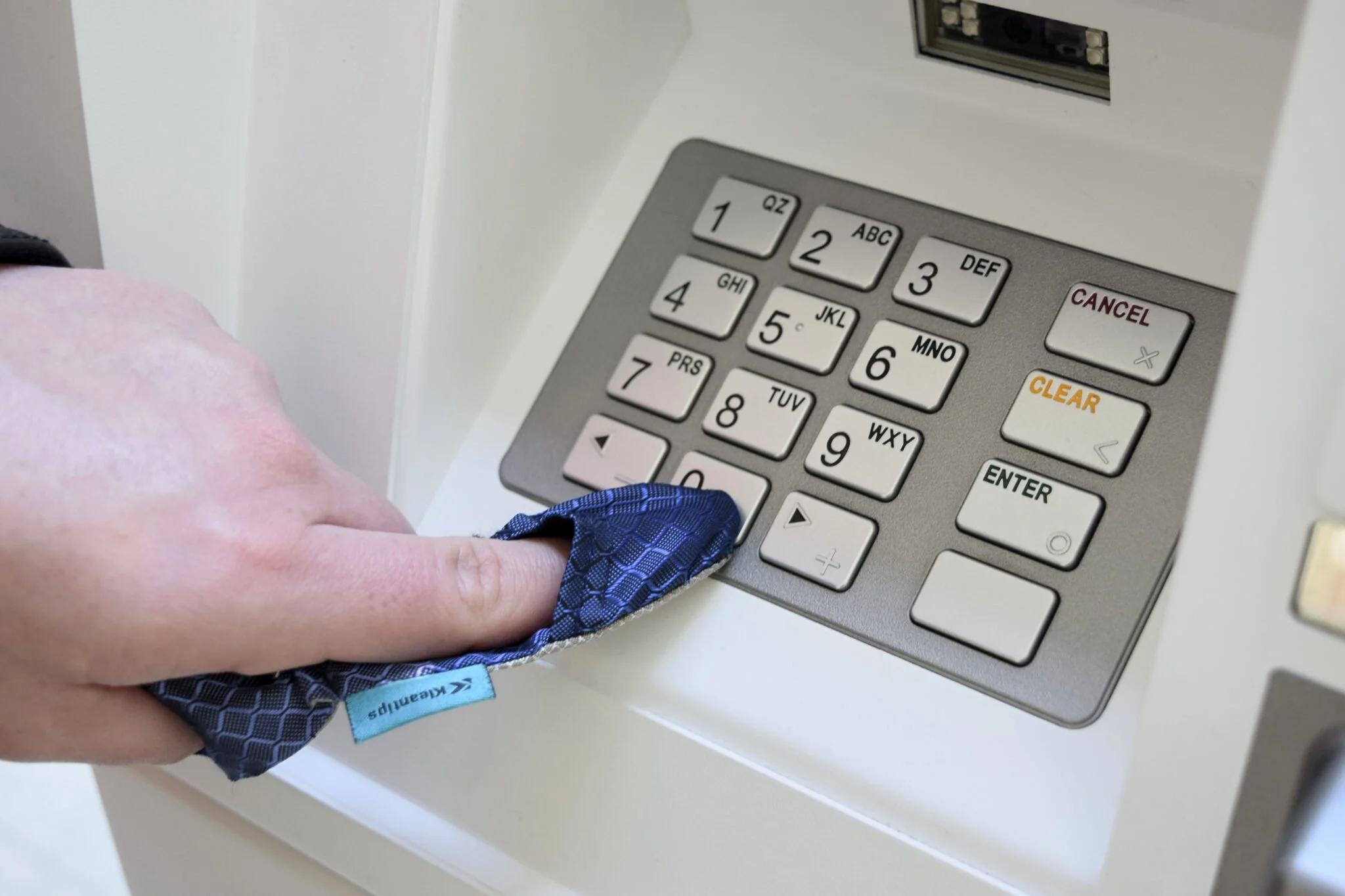
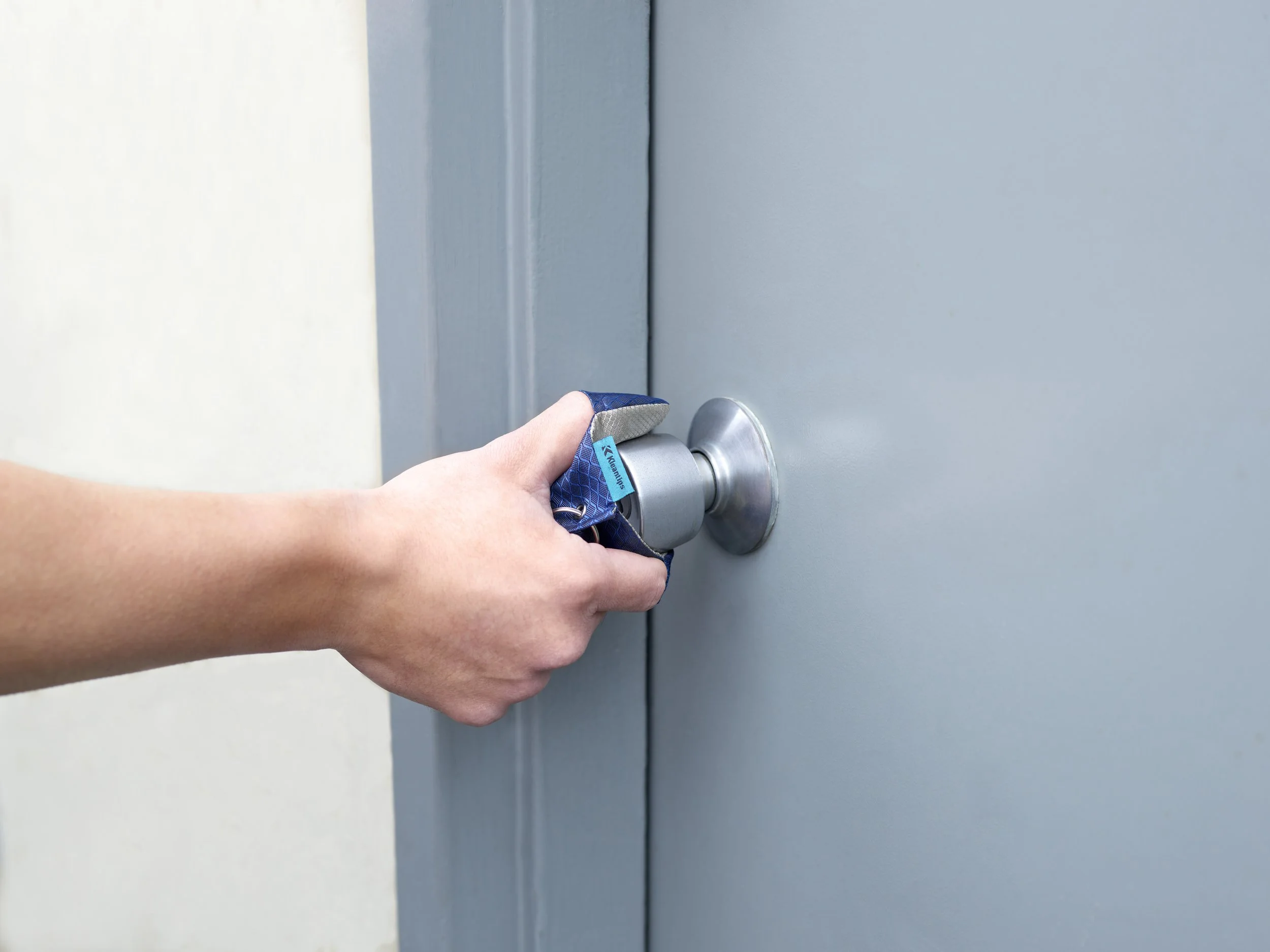
For an everyday tool to be useful, it must be easy to understand without instruction. Kleantips uses a divided form that slips over the fingers and creates two opposing contact surfaces. The user can pinch, press, turn, pull, or swipe while keeping the antimicrobial textile between the hand and the object.
The shape supports a range of familiar gestures:
Gripping and turning a door handle
Pressing elevator buttons or public keypads
Entering information on a payment terminal
Using compatible touchscreens and touch pads
Handling shared fixtures when an additional contact barrier is preferred
The form was intentionally soft and forgiving. It conforms to the hand instead of forcing the hand into a prescribed position. It also folds flat, eliminating the bulk associated with many rigid contact tools.
Accessibility Is Part of the Product
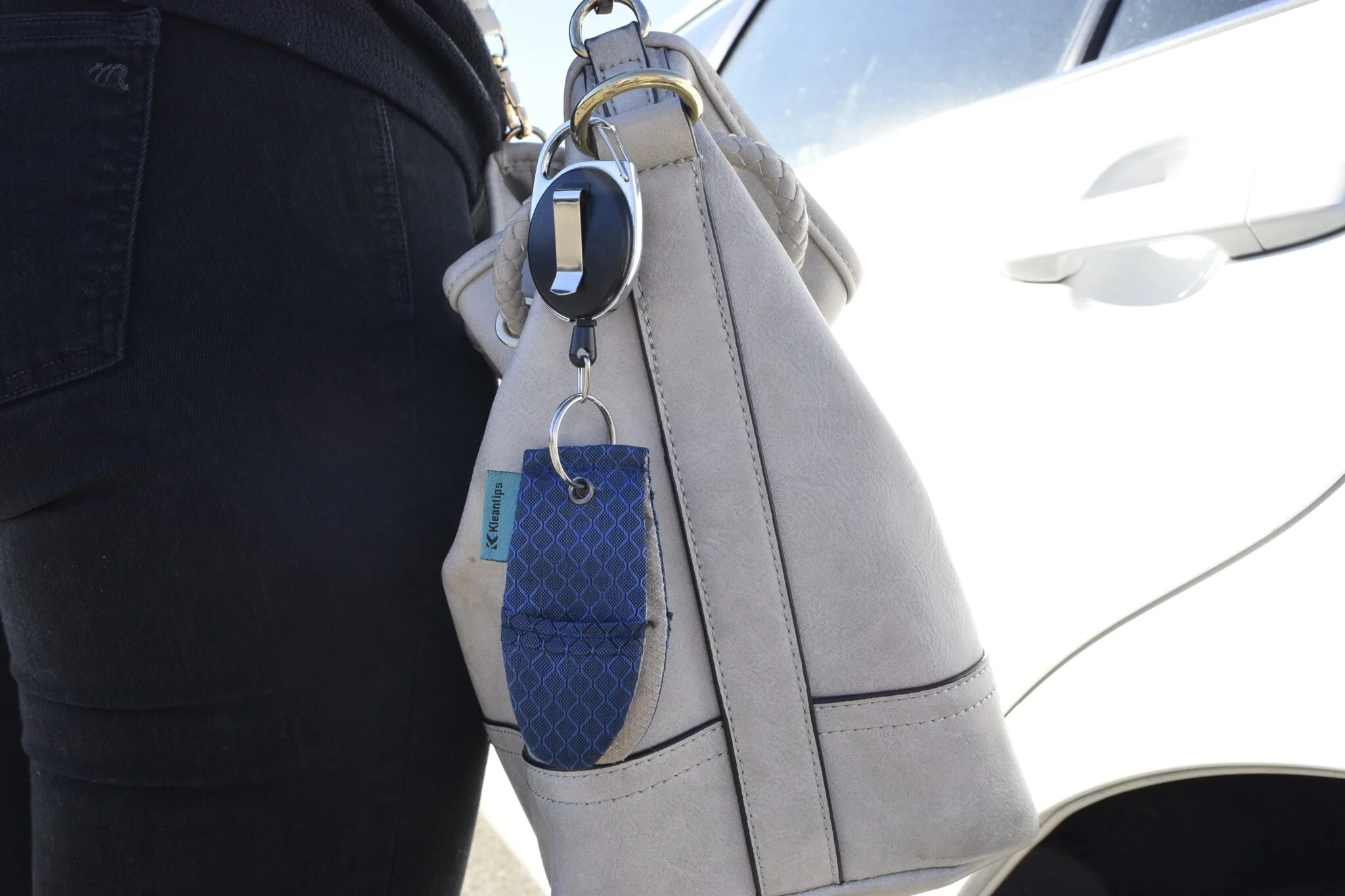
A protective accessory stored at the bottom of a bag is rarely available when needed. For Kleantips to become part of daily behavior, access had to be considered as carefully as the textile and finger interface.
An integrated eyelet allows the product to attach to a keychain, purse, backpack, or retractable cable. The retractable option keeps it visible and immediately available, then draws it back into place after use. It can also be folded and carried in a pocket.
These are small decisions, but they determine whether a product becomes useful or merely remains a good idea. The value of an everyday carry object depends on how naturally it enters a routine.
Designing With Care, Not Fear
Kleantips emerged from an extraordinary moment, but I do not view it as an artifact of fear. I see it as an exploration of material intelligence and thoughtful preparation.
The broader design question remains relevant: how can we interact more intentionally with shared environments? People may want an additional barrier for many reasons, including travel, work, personal preference, or situations where access to handwashing is limited. A useful product should support that choice without creating alarm or demanding attention.
Kleantips was designed to offer an unobtrusive option. It does not attempt to replace handwashing, established hygiene practices, or appropriate protective equipment. It is simply a reusable interface for moments when someone prefers not to make direct contact with a shared surface.
That distinction is important. Responsible design should give people useful choices while communicating the purpose and limitations of a product clearly.
My Approach to Innovation
I often begin by observing the small compensations people make throughout the day. We use a sleeve to open a door, a knuckle to press a button, or the corner of a card to interact with a keypad. These improvised behaviors reveal unmet needs.
Kleantips developed from noticing those moments and asking whether one compact object could support them more elegantly. The exploration moved through materials, hand movements, attachment methods, portability, and the technical requirements of touchscreen interaction.
The result is intentionally modest. It does not ask the environment to change. It adapts to the environment that already exists.
That is often where I find the most interesting design opportunities. A thoughtful solution does not need to be large or mechanically complex. It needs to understand the moment in which it will be used.
A Textile Interface for Everyday Life
Kleantips brings together antimicrobial conductive fabric, intuitive hand geometry, and portable everyday carry design. Its innovation lies not in any single feature, but in the way those elements work together.
The material enables touch. The form enables control. The attachment keeps the product within reach. Together, they transform a small piece of fabric into a purposeful interface between the individual and the shared world.
Kleantips reflects a principle that runs throughout my work: careful observation can reveal opportunity in the most ordinary actions. Sometimes innovation begins by looking closely at a familiar point of contact and asking how it might become more thoughtful.
